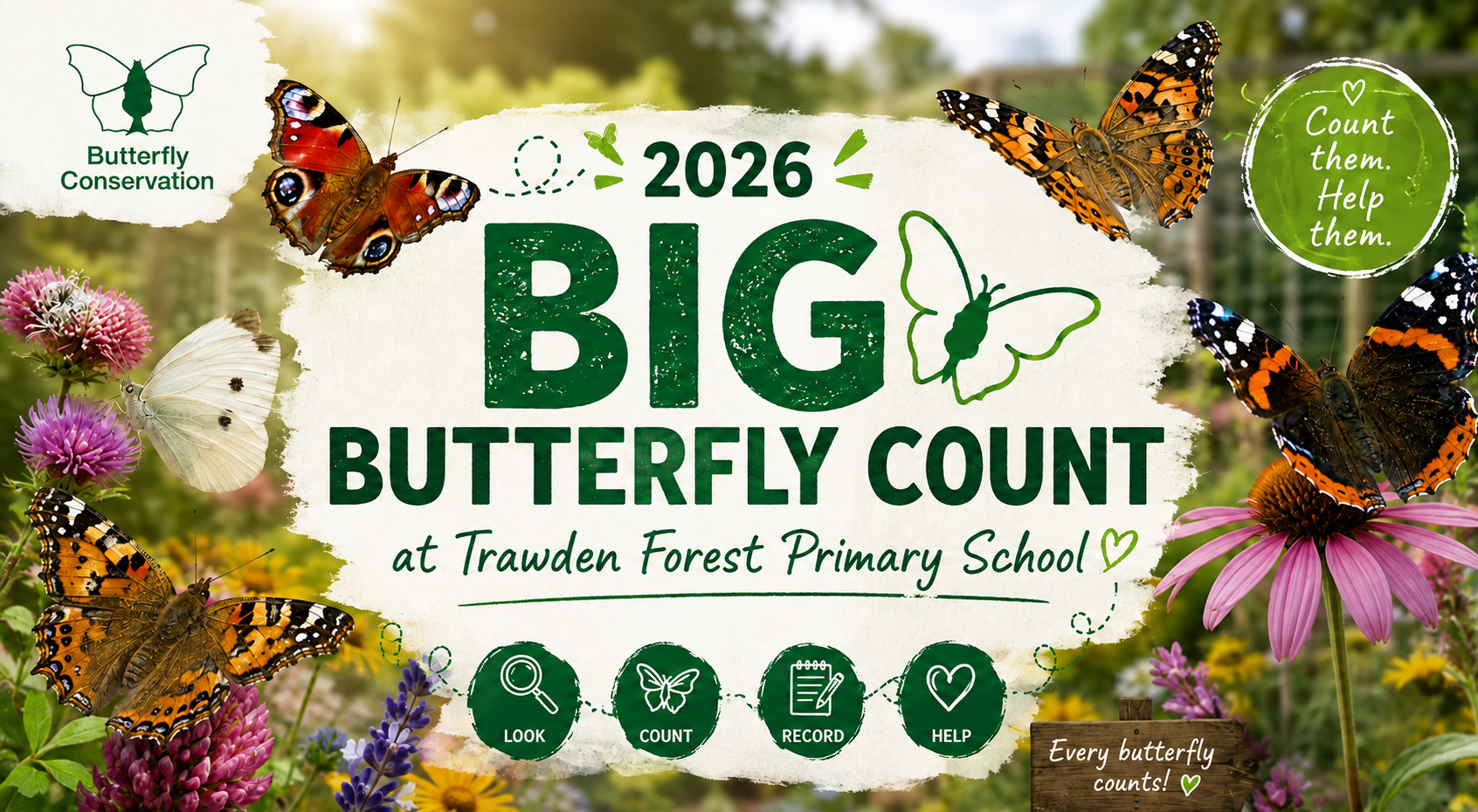
Our garden is more than somewhere to grow plants, it’s a place where wildlife comes to feed, shelter and thrive. As part of the Big Butterfly Count, we turned our attention to the butterflies visiting our flowers.
The Big Butterfly Count is a nationwide citizen science project that helps build a picture of how butterflies and day-flying moths are doing across the UK. By taking a few minutes to observe and record the butterflies we see, we can contribute to a much bigger picture of our nation’s butterfly populations.
With the children enjoying their summer break, the count was carried out in our school garden ready to share with them when they return. It was a wonderful opportunity to slow down, look closely at the plants and see which butterflies were visiting our growing area.
Our school garden provides a wonderful source of food for butterflies, with an abundance of flowering plants and herbaceous perennials providing nectar throughout the growing season. Our diverse planting creates a colourful, nectar-rich oasis for butterflies and other pollinators, with flowers growing throughout the garden, from our dedicated pollinator border to the planting amongst our vegetables. With so many different flowers in bloom, there are plenty of places for butterflies and other insects to feed.
We were particularly interested to discover which species were visiting our garden and how many different types we could spot.
Our Big Butterfly Count Results
During our 15-minute count, we recorded 32 butterflies from five different species:
Peacock – 4
Red Admiral – 3
Large White – 8
Small White – 12
Painted Lady – 5
The Small White was the most frequently recorded butterfly during our count, with 12 visitors spotted in the garden. We were also delighted to see five different species visiting our garden.
Taking part in the Big Butterfly Count gave us another opportunity to stop and look closely at the wildlife that shares our garden. Although the children were on their summer break when the count took place, we look forward to sharing the results with them when they return and discovering which butterflies they might spot for themselves.
Our butterfly count is another reminder that the plants we grow provide much more than colour and interest. By creating spaces filled with flowering plants, we can provide valuable food for pollinators and help make our school garden a welcoming place for wildlife.